


Defining Luxury in Dubai’s Design Market
Dubai is more than just a city of superlatives—it’s a design destination where sophisticated residents demand the finest in home furnishings. The luxury furniture market here isn’t driven by trends or mass production; it’s built on authenticity, craftsmanship, and the pursuit of pieces that transcend time. Whether you’re furnishing a sprawling villa in Emirates Hills or a contemporary apartment overlooking the Gulf, the question isn’t where to find luxury furniture in Dubai—it’s how to distinguish genuine investment pieces from superficial imitations.
The high-net-worth individuals who call Dubai home understand something fundamental: the right furniture isn’t an expense. It’s an investment in your space, your lifestyle, and your identity. A Barcelona Chair, a Saarinen table, a handcrafted Tacchini sofa—these aren’t interchangeable commodities. They’re architectural statements designed by legends, built with heritage craftsmanship, and engineered to last lifetimes.
This guide reveals everything you need to know about acquiring luxury furniture in Dubai: what genuinely defines luxury, why the market here is distinct, which brands and pieces deliver real value, and how to navigate the selection process like a collector rather than a consumer. By the end, you’ll understand not just where to buy, but what to buy and why it matters.
What Actually Defines Luxury Furniture?
The term “luxury furniture” is thrown around carelessly in design retail. A velvet sofa with a high price tag isn’t necessarily luxury. A brand name doesn’t guarantee quality. True luxury furniture sits at the intersection of five non-negotiable criteria that separate investment pieces from disposable design.
Design Heritage and Authorship
Luxury furniture begins with a singular vision: a designer or design house with a coherent philosophy and decades of intention. When you purchase a chair designed by Charles and Ray Eames, you’re not buying a chair. You’re acquiring a piece shaped by two modernist pioneers who fundamentally changed how we think about everyday objects.
Knoll’s Barcelona Chair, designed by Mies van der Rohe in 1929, is luxury because it emerged from a specific moment in design history when a master architect decided to create the perfect lounge chair for a Spanish pavilion. Eighty years later, that chair looks exactly as relevant because the design wasn’t following a trend—it defined one.
Similarly, Carl Hansen & Son’s Wishbone Chair (CH24), designed by Hans Wegner in 1950, carries the weight of Danish craftsmanship philosophy. It wasn’t designed to be comfortable for 5 years; it was designed to be comfortable for 50. That distinction—designing for permanence rather than seasons—is the first marker of luxury.
Uncompromising Material Selection
Luxury furniture respects materials. A leather sofa isn’t luxury because it contains leather; it’s luxury when that leather is sourced from specific tanneries, selected for grain and patina potential, and treated through traditional processes that enhance rather than mask its natural properties.
Tacchini, the Italian furniture house, sources materials with the rigor of a Swiss watchmaker. Their leather comes with provenance. Their walnut is FSC-certified and selected for grain pattern consistency. Their fabric is Italian-woven to specifications that define durability in threads per inch—numbers that mass manufacturers never achieve.
This obsession with material extends beyond leather and wood. When Gubi specifies Carrara marble for their Epic Coffee Table, they’re not choosing marble because it looks expensive. They’re choosing it because marble ages beautifully, patinas authentically, and tells the story of time through microscopic changes that cheap materials cannot simulate.
Engineered Durability
Luxury furniture is engineered for permanence. A Barcelona Chair’s steel frame isn’t welded randomly; it’s tensioned to exact specifications. The leather wrapping isn’t stapled; it’s hand-fitted over months of development. The cushioning isn’t foam that compresses; it’s a specific density engineered to maintain its form after 10,000 compressions annually.
This engineering intensity is invisible to the casual observer. A $2,000 sofa and a $8,000 sofa might look identical in a photograph. But the $8,000 sofa has been engineered so that its seating geometry doesn’t degrade after five years of daily use. The frame is kiln-dried hardwood, not particle board wrapped in veneer. The suspension is eight-way hand-tied, not stapled springs.
Martinelli Luce’s Pipistrello Floor Lamp, designed in 1965, uses a telescoping mechanism that glides smoothly after 60 years of use because the engineering anticipates wear and designs for it. That’s luxury—durability that emerges from genuine engineering, not wishful thinking.
Timeless Aesthetic Language
Luxury furniture doesn’t chase trends because trends are, by definition, temporary. Instead, luxury pieces embody aesthetic languages so fundamental that they transcend decades.
The clean lines of Knoll’s Wassily Chair (also known as the Breuer Chair) from 1925 look as modern today as they did in a 1960s minimalist interior and will in 2050. Not because the design is “timeless” in some fuzzy sense, but because it’s based on functional clarity: support a human body efficiently with the minimum material necessary. That equation never goes out of style.
Similarly, the Flowerpot Pendants by &Tradition—designed by Verner Panton in 1969—remain iconic because they solved a problem with genuine elegance. The curves aren’t decorative; they’re functional, directing light and creating visual balance. The design language is pure, making them equally at home in a contemporary Dubai apartment or a classic Scandinavian home.
Provenance and Authentication
In a market flooded with reproductions and counterfeit designs, genuine luxury furniture comes with authenticated provenance. You don’t just buy a Barcelona Chair; you acquire documentation proving it was manufactured by Knoll, the authorized producer. The serial number connects your chair to a specific production run, in a specific material, at a specific time.
This provenance matters because it protects your investment. A genuine Barcelona Chair in leather will hold its value and continue appreciating because collectors recognize its authenticity. A counterfeit, no matter how well-made, has zero resale value and zero collectibility.
Authorized retailers in Dubai—like Clay Concept—guarantee this authenticity. When you purchase directly from an authorized dealer, you’re not just getting furniture; you’re getting certification, warranty, and the assurance that your investment is genuine.
Why Dubai Is a Distinct Market for Luxury Furniture
Dubai’s luxury furniture market operates under different dynamics than other global design centers. Understanding these dynamics is crucial for making informed purchasing decisions.
Demographic Concentration of High-Net-Worth Individuals
Dubai hosts one of the world’s largest concentrations of high-net-worth individuals in a relatively small geographic area. This creates a unique demand pattern: substantial numbers of affluent residents constantly furnishing new properties, upgrading existing homes, or acquiring second residences.
This concentration means Dubai retailers have developed infrastructure and expertise that might take years to develop in other markets. Authorized dealers maintain larger inventories. Installation services are specialized and responsive. The retail infrastructure caters to international standards because the customer base is international.
It also means pricing reflects genuine market dynamics rather than import markups. While you might wait 12 weeks for a Saarinen table to arrive in London, Clay Concept stocks it immediately. That supply guarantee has real value, particularly for individuals furnishing multiple properties simultaneously.
Investment Property Market and Staging
A significant portion of Dubai’s luxury furniture demand emerges from the investment property market. High-net-worth residents purchasing properties for capital appreciation need to furnish them at a level that attracts quality tenants or eventual buyers.
This creates demand for investment-grade pieces—furniture that maintains value, photographs beautifully, and appeals across diverse aesthetic preferences. A Barcelona Chair in cognac leather, a Saarinen dining table, a Tacchini sofa—these pieces transcend personal taste preferences and maintain value in secondary markets.
For investors, this means luxury furniture in Dubai isn’t pure consumption; it’s capital deployment with genuine resale liquidity. That financial reality shapes the market toward pieces with proven longevity and collectibility.
International Buyer Base and Global Standards
Unlike markets dominated by local preferences, Dubai’s luxury furniture market operates to international standards. A collector from Manhattan, London, or Tokyo expects to find the same authorized brands, the same product specifications, and the same warranty documentation in Dubai as in their home city.
This standardization is reassuring. It means you’re not purchasing Dubai-specific variants or localized interpretations. You’re acquiring the same iconic pieces available globally, with the advantage of local availability and professional installation.
Climate Considerations and Material Selection
Dubai’s climate—intense heat, high humidity near the coast, and seasonal dust storms—shapes material selection in ways subtle but significant. Leather that’s beautiful in Copenhagen must resist fading and cracking in 50-degree heat. Wood must be properly sealed and finished to withstand humidity fluctuations. Cushioning must be treated for dust mite resistance.
This reality drives selection toward brands with deep experience in challenging climates. Tacchini’s Italian heritage doesn’t just mean aesthetic refinement; it means engineering developed in Mediterranean heat. Carl Hansen & Son’s Danish finishing techniques aren’t just traditional; they’re specifically engineered for wood movement and environmental stress.
Premium retailers in Dubai understand these nuances and stock pieces specifically selected for the climate. That’s another invisible value factor when purchasing from authorized dealers who understand local conditions.
The Iconic Brands Defining Dubai Luxury Furniture
Several brands have established themselves as benchmarks for luxury furniture in Dubai. Understanding each brand’s philosophy and signature pieces helps you navigate the market strategically.
Knoll: American Modernism and Timeless Icons
Knoll, founded in 1938, represents American modernism at its most refined. The brand’s design philosophy: eliminate ornament, solve problems with pure form, create spaces of clarity and purpose.
This philosophy manifests in pieces like the Barcelona Chair (designed by Mies van der Rohe, 1929), arguably the most iconic lounge chair ever created. Its leather-wrapped steel frame, hand-stitched and tensioned, creates a silhouette that’s simultaneously minimalist and sumptuous. It’s equally at home in a contemporary Dubai villa or a classic modernist apartment.

The Wassily Chair (designed by Marcel Breuer, 1925) applies the same minimalist philosophy to a different problem: a cantilevered chair supported by tubular steel. Like the Barcelona, it’s engineered for permanence and recognizable across decades.

For dining, the Saarinen Collection—designed by Eero Saarinen—delivers sculptural elegance. The Saarinen Oval Dining Table, with its single marble-topped pedestal base, eliminates the visual clutter of traditional legs while providing genuine structural stability. A 244cm black marble Saarinen table becomes the centerpiece of a formal dining space—a sculptural statement that commands attention.
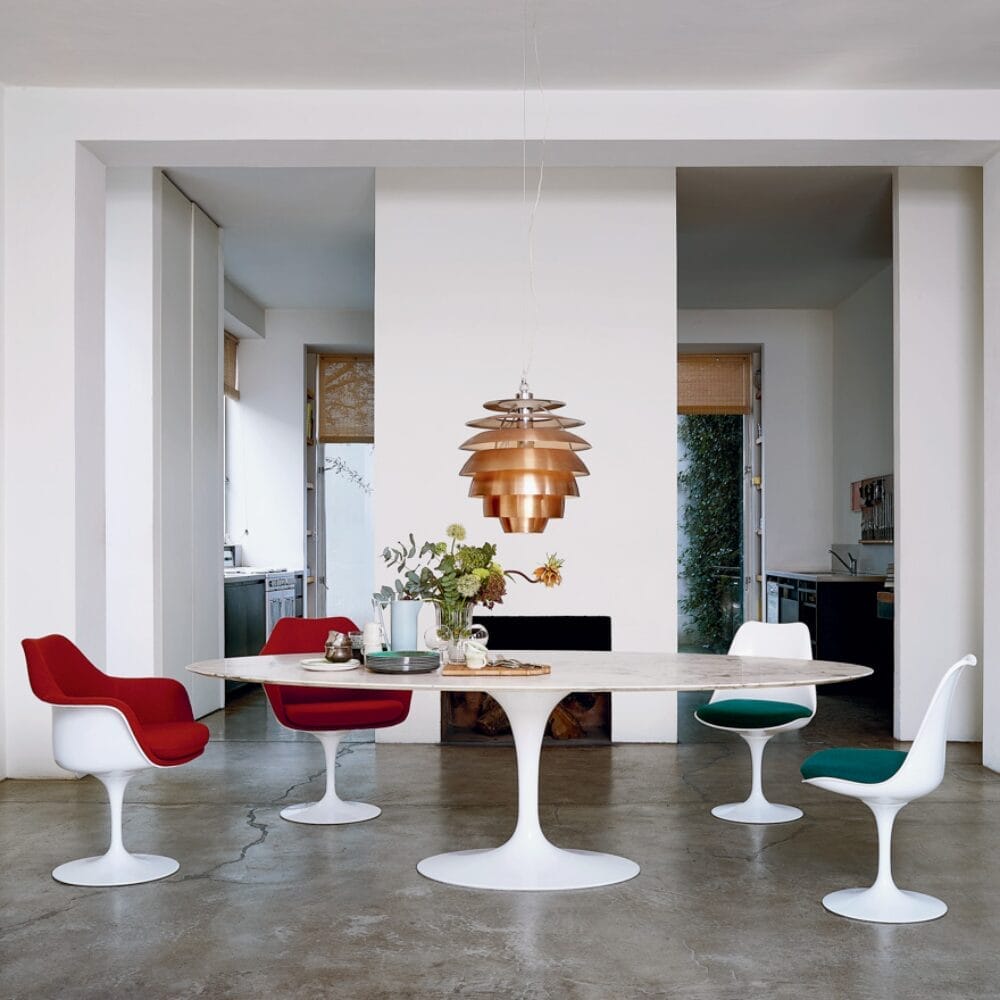
Why Knoll in Dubai: Investment-grade pieces with museum-quality lineage. High recognition value among collectors. Proven durability across six decades of ownership. Appreciating resale value.
Tacchini: Italian Refinement and Contemporary Elegance
Tacchini, founded in 1996 by Paolo Nava as a continuation of earlier Italian furniture traditions, represents a distinct philosophy: contemporary design rooted in craft. Unlike Knoll’s modernist reduction, Tacchini embraces material warmth, comfortable proportions, and the idea that furniture should invite use rather than just display.
The Elephant Armchair, with its curved walnut frame and leather upholstery, exemplifies this philosophy. It’s recognizably contemporary—no historical pastiche—but it’s designed for comfort, not just aesthetics. The curved forms are structural, not decorative. The proportions are refined without being precious.

The Sesann Sofa, another signature piece, combines Italian craftsmanship with contemporary sensibilities. Its modular structure allows customization, but each element is designed with material restraint and functional clarity. You’re purchasing flexibility without sacrificing coherence.
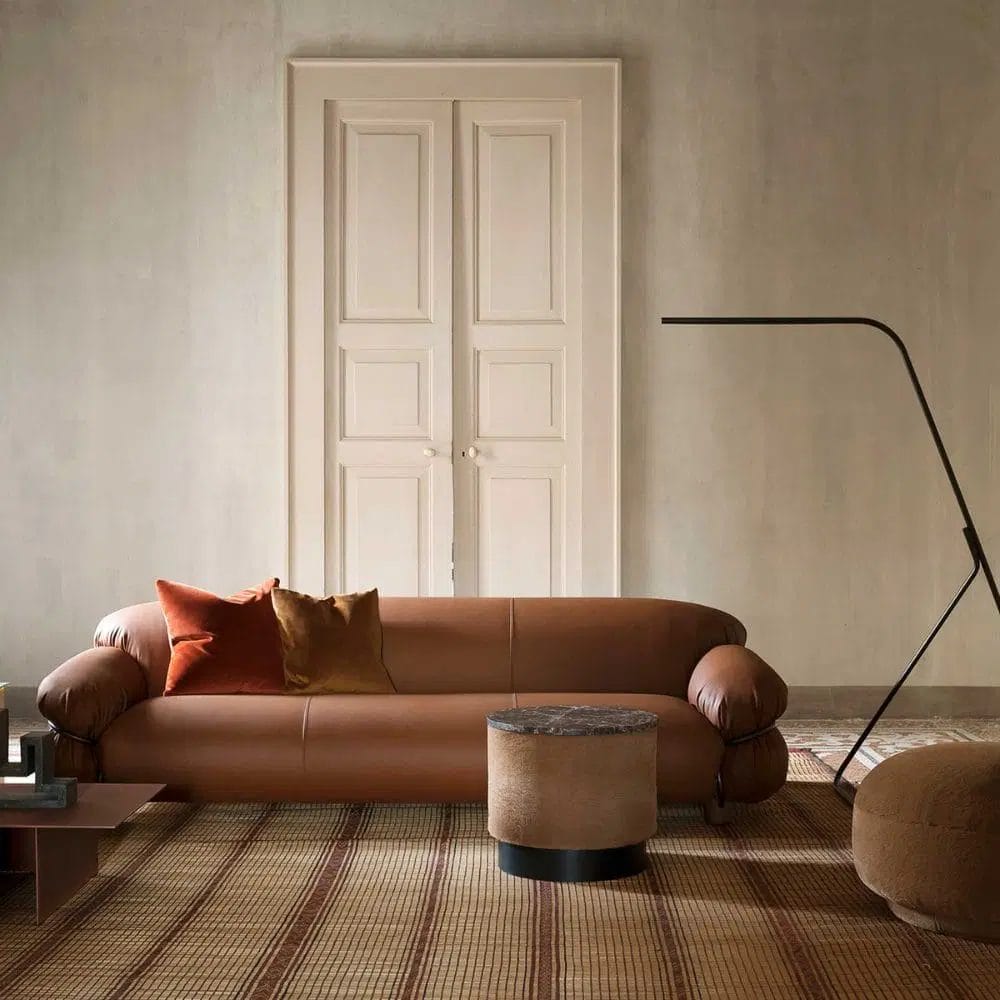
For Tacchini, materials are paramount. Leather is carefully sourced for character and patina potential. Wood is selected for grain pattern consistency. Fabric is Italian-woven to weights that ensure durability over decades.
Why Tacchini in Dubai: Contemporary alternatives to modernist classics. Italian craftsmanship with sophisticated proportions. High-touch customization options. Pieces that combine visual refinement with genuine comfort.
Carl Hansen & Son: Danish Craftsmanship and Timeless Design
Carl Hansen & Son represents perhaps the purest expression of furniture craftsmanship heritage. Founded in 1908, the company has maintained family ownership and production in Denmark through every design movement, every war, every economic upheaval.
Their philosophy is deceptively simple: make furniture that improves with age. This isn’t marketing language. It’s a governing principle. Their finishes are designed to patina beautifully. Their wood is aged and kiln-dried to exact specifications. Their joinery is hand-fitted and reinforced through traditional techniques.
The CH24 Wishbone Chair, designed by Hans Wegner in 1950, is perhaps the most recognizable example. It’s been in continuous production for 75+ years—not because it’s a museum piece, but because people buy it, live with it, and pass it to their children. Its simple form—a steam-bent back, wooden seat, four tapered legs—is deceptively engineered for comfort and longevity.

Why Carl Hansen & Son in Dubai: Furniture that becomes family heirlooms. Pieces that appreciate in value as they age. Designs of such purity that they transcend trend cycles. Craftsmanship heritage that spans over a century.
Gubi: Contemporary Scandinavian Design and Material Innovation
Gubi, a Danish company founded in 1967, represents contemporary Scandinavian design—post-minimalist, material-focused, and often playful in its approach to form.
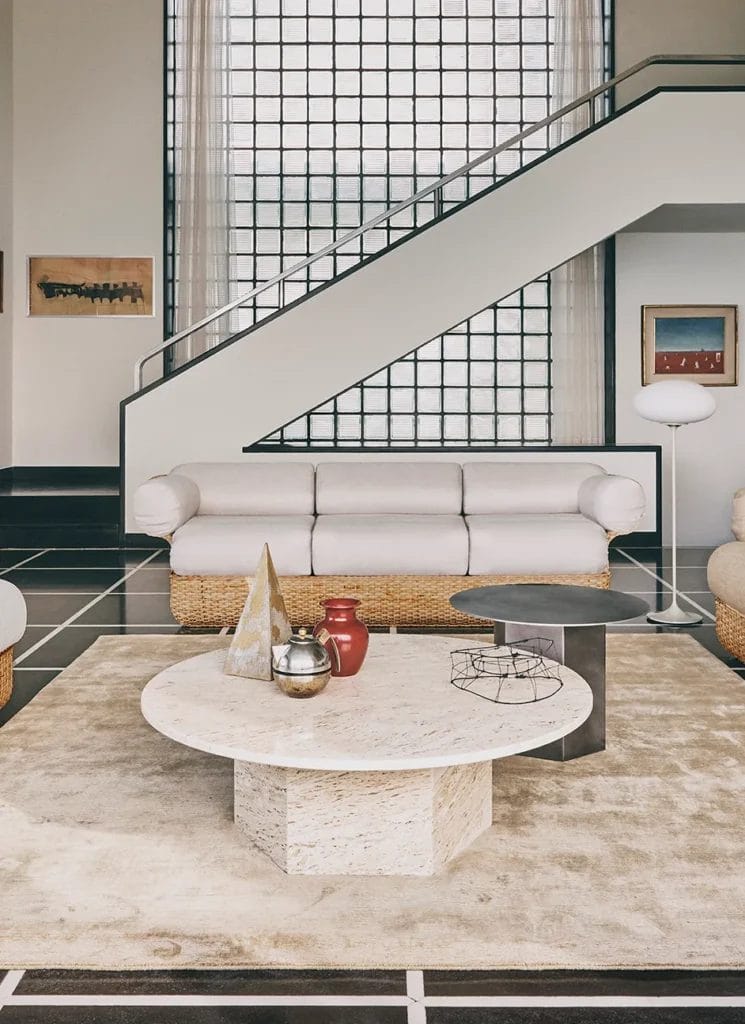
Their Epic Coffee Table, available in natural travertine with a robust round form, demonstrates their material philosophy. The travertine isn’t polished to glossy perfection; it’s left relatively raw, allowing natural color variation and texture to express the stone’s origin. The round form is structurally pure, but it’s also visually generous—not austere.
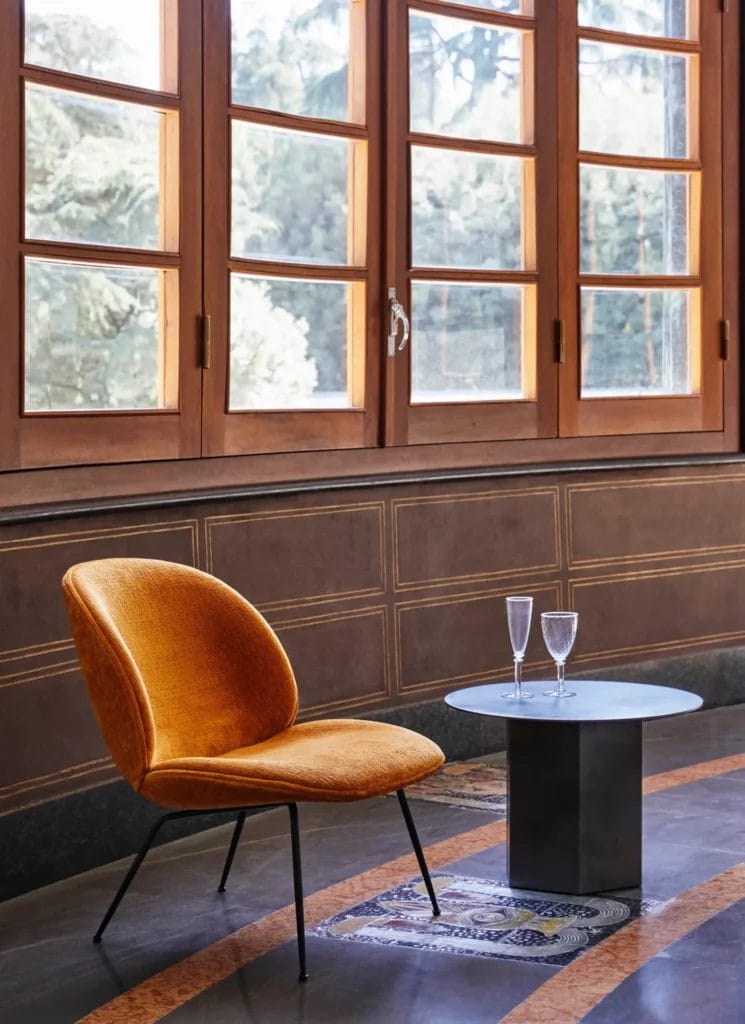
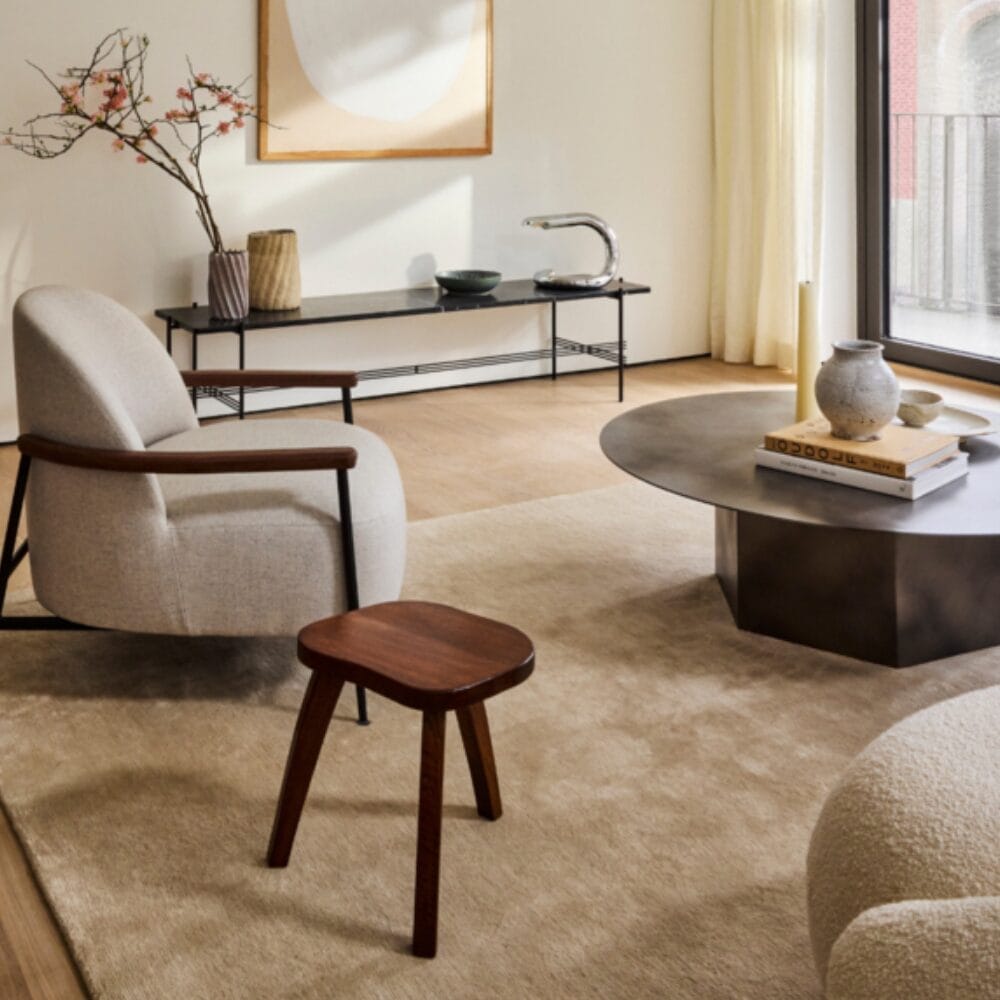
The 1972 Pendant, designed by Jens Møller, combines brass and bamboo in a way that feels both retro and contemporary. It’s a design that acknowledged 1970s form vocabulary while using materials (bamboo) that suggest sustainability and natural warmth. Available in 90cm diameter, it makes a genuine statement in a dining room or living space.

Why Gubi in Dubai: Contemporary pieces that don’t feel like modern minimalism. Material authenticity and natural finishes. Scandinavian heritage without modernist severity. Strong visual presence without visual aggression.
&Tradition: Modern Danish Heritage
&Tradition, founded in 2010, takes a distinct approach: partnering with design heritage by acquiring rights to iconic pieces and commissioning contemporary designers working within a Scandinavian aesthetic framework.
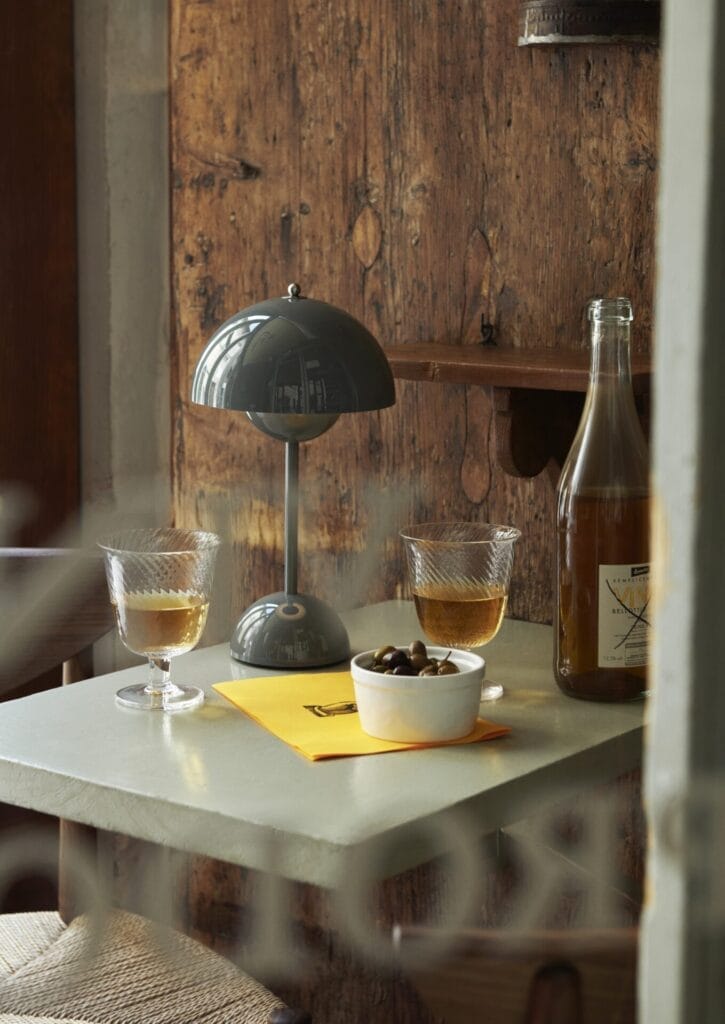
Their Flowerpot Pendant series, designed by Verner Panton in 1969, has become iconic in Dubai interiors. The pendant’s spherical form, split into two colored sections, creates visual interest while being structurally pure. The colored glass (available in options like stone blue and grey beige) diffuses light warmly. It’s become a signature piece in contemporary Dubai homes.

Why &Tradition in Dubai: Curated heritage pieces with contemporary relevance. Strong design philosophy but flexible in execution. Pieces that work across aesthetic preferences.
Flos: Lighting as Design Narrative
Flos, the Italian lighting house founded in 1962, approaches lighting as complete design narratives rather than functional necessities. Each piece is authored by significant designers and carries genuine design intention.
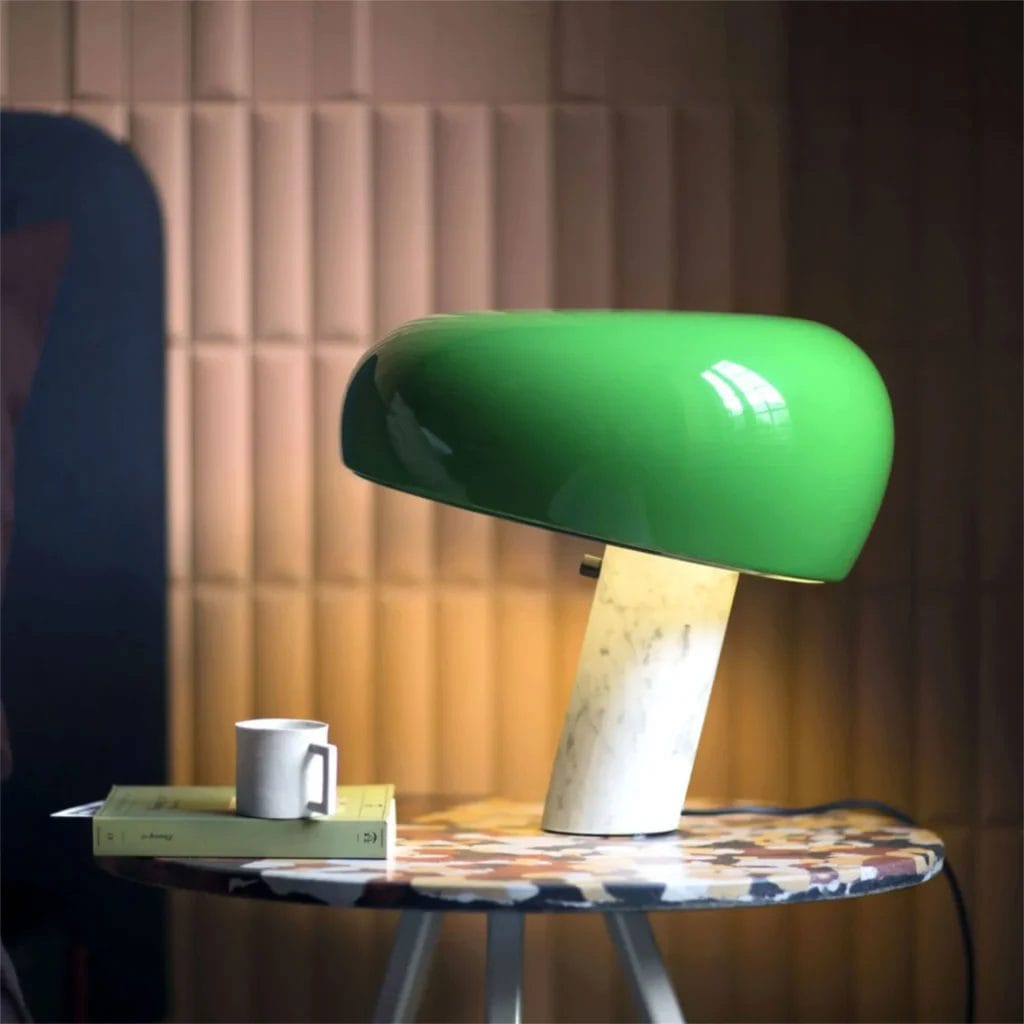
The Snoopy Touch, designed by Achille and Pier Giacomo Castiglioni in 1967, represents their philosophy perfectly. It’s a portable lamp that’s also a sculptural object—a form so distinctive that it’s recognizable across decades and contexts. The brass base and the angled diffuser combine functionality with visual character.
Why Flos in Dubai: Lighting that functions as design art. Pieces with genuine design provenance. Emotional connection between user and object.
How to Choose Luxury Furniture: A Curator’s Framework
Purchasing luxury furniture requires a distinct mindset from buying standard furniture. You’re not shopping for items that will last five years; you’re curating pieces that will define your space for decades.
Consider Design Heritage Over Personal Preference
Your personal aesthetic preference should not be the primary criterion for luxury furniture purchase. Instead, prioritize design heritage and provenance. A Barcelona Chair in a color that doesn’t match your current aesthetic might still be the right purchase because the piece has proven collector value and will work across multiple contexts over time.
Think of it like wine collecting. You don’t only buy wines that suit your current palate; you sometimes purchase wines with heritage and critical recognition because they’ll improve with age and maintain value.
Invest in Signature Pieces with Proven Longevity
Every brand has signature pieces—designs that have maintained cultural relevance for decades. For Knoll, that’s the Barcelona and Wassily chairs. For Carl Hansen & Son, it’s the CH24 Wishbone. These pieces have proven longevity not because they’re old, but because they’re culturally significant.
A significant portion of your luxury furniture budget should go toward these signature pieces. They’re lower-risk investments with higher liquidity and appreciation potential. They’re also easier to integrate into your space because they’re recognizable and work across aesthetic contexts.
Understand Material Implications for Your Climate
In Dubai’s climate, material selection has practical implications beyond aesthetics. Leather fades differently in intense UV exposure. Wood responds to humidity fluctuations. Some finishes crack under heat stress.
When selecting luxury pieces, ask the retailer about material choices specifically for climate. Why was this leather selected? How is the wood finished to withstand heat? What cushioning material is specified? These aren’t trivial details; they’re the difference between furniture that ages beautifully and furniture that degrades prematurely.
Authorized retailers in Dubai, like Clay Concept, can guide these decisions because they understand local climate implications. They’ve seen how pieces age in local conditions and can specify materials accordingly.
Balance Investment Pieces with Lifestyle Purchases
Not every furniture purchase needs to be a museum-quality investment. The framework: allocate the majority of your budget to signature pieces with heritage and proven value (Barcelona Chair, Saarinen table, Wishbone chair), but reserve budget for pieces that serve lifestyle needs and personal preference (a Tacchini sofa in your favorite color, a Gubi coffee table that matches your aesthetic, contemporary Flos lighting that suits your lifestyle).
This balance ensures your space feels personally authentic while maintaining overall investment value.
Don’t Compromise on Installation and Service
Professional installation isn’t a luxury add-on; it’s essential for high-value pieces. A Barcelona Chair should be placed on a floor with proper underlay. A marble-topped Saarinen table requires installation that accounts for marble settling. Pendant lighting must be electrically installed with precise specifications.
When you purchase from authorized retailers who provide installation service, you’re acquiring expertise that protects your investment. The installation team understands how to position pieces for longevity, how to protect materials during placement, and how to ensure structural stability.
The Dubai Advantage: Stock Availability and Immediate Dispatch
One practical reality distinguishes the Dubai luxury furniture market: stock availability. Unlike most global design centers where you order pieces that arrive in 12-16 weeks, authorized Dubai retailers maintain inventory of signature pieces available for immediate dispatch.
This advantage has multiple implications:
Immediate Gratification: You can view, evaluate, and acquire pieces immediately rather than living with renderings or photographs. You can assess materials in person. You can verify proportions within your space context. This reduces decision uncertainty significantly.
Price Certainty: You purchase based on immediate pricing rather than hedging currency fluctuations across a 16-week lead time. In volatile markets, this is a genuine financial advantage.
Specification Control: You don’t need to compromise on specifications. You can verify leather tannage, marble sourcing, finish specifications, and other details before purchase. You’re not accepting whatever inventory arrives in 16 weeks; you’re selecting from curated pieces chosen for quality and durability.
Installation Expertise: Immediate availability allows retailers to develop deep installation expertise. Teams understand how to handle pieces in Dubai’s climate, how to position them for optimal longevity, and how to manage materials (particularly marble and leather) through seasonal changes.
The Investment Reality: Luxury Furniture as Capital Appreciation
This is perhaps the least discussed but most important aspect of luxury furniture acquisition in Dubai: genuine investment-grade pieces appreciate over time while providing use value.
This isn’t universally true. A trendy contemporary sofa loses value as trends shift. A piece with weak design provenance depreciates as usage wears it down. But signature pieces from established brands—Barcelona Chair, Wassily Chair, Saarinen Table, CH24 Wishbone—genuinely appreciate.
Why? Because each year, fewer examples exist in perfect condition. Design museums acquire iconic pieces. Collectors actively purchase them for appreciation. The global market for authenticated iconic furniture remains strong and continues appreciating.
For Dubai’s high-net-worth residents, this reality shapes purchasing strategy. Instead of viewing luxury furniture as consumption, you can view it as capital deployment. You’re acquiring pieces that appreciate in value while improving your living space. The rental income generated by your furnished investment property can be higher because quality furniture commands higher rents. The property’s ultimate sale price can be higher because it’s furnished with investment-grade pieces.
This financial reality reinforces the importance of purchasing through authorized retailers with documentation and warranties. A Barcelona Chair from an authorized Knoll retailer, with complete documentation and warranty, maintains investment value. A Barcelona Chair from an uncertain source has no investment value.
Where to Purchase: Authorized Retailers and the Value Proposition
Not all authorized retailers are equivalent. When evaluating where to purchase luxury furniture in Dubai, consider:
Stock Guarantee and Immediate Dispatch
Reputable retailers maintain inventory specifically to guarantee immediate availability. This requires significant capital investment and space commitment. Not every retailer makes this investment. Those who do—like Clay Concept—have chosen to prioritize your immediate access over traditional wholesale models that demand minimal inventory.
This stock guarantee directly impacts your purchasing power. You can assemble an entire collection over weeks rather than months. You can acquire signature pieces without compromising on specifications. You can respond to design opportunities as they emerge.
Professional Installation Services
Installation is not a simple service where any furniture delivery team can execute successfully. High-end pieces require specialized handling, environmental considerations, and positioning expertise.
Authorized retailers who provide professional installation have trained teams who understand material properties, structural considerations, and the specific needs of luxury pieces. They know how to position marble tables to account for settling. They understand how to protect leather during transit and placement. They have expertise in electrical installation for premium lighting pieces.
This service isn’t incidental to the purchase; it’s essential protection for your investment.
Design Consultation and Curation Expertise
The best authorized retailers function as design curators, not just salespeople. They understand your space requirements, your aesthetic preferences, and your investment objectives. They can recommend pieces based on your specific context rather than inventory they’re trying to move.
This consultation expertise is particularly valuable for high-net-worth individuals with complex requirements: multiple properties requiring cohesive design narratives, specific material requirements for climate challenges, or sophisticated aesthetic demands that require expert guidance.
Warranty, Documentation, and Authentication
Authorized retailers provide complete documentation proving authenticity, material specifications, warranty coverage, and maintenance requirements. This documentation protects your investment and maintains resale value.
For pieces like the Barcelona Chair, documentation proving Knoll manufacture is essential. The furniture itself might be indistinguishable from a counterfeit to the untrained eye, but the authenticated documentation ensures investment value and collectibility.
Building Your Luxury Furniture Collection
Furnishing your Dubai home with luxury pieces is more than acquiring beautiful objects. It’s curating a collection of design narratives—pieces designed by masters, manufactured by heritage crafts houses, and built to improve with age.
The process begins with understanding that genuine luxury has specific characteristics: design heritage, uncompromising materials, engineered durability, timeless aesthetics, and authenticated provenance. It continues with recognizing that Dubai offers distinct advantages—high concentrations of wealth, international design standards, immediate availability, and professional expertise—that simplify acquisition and ensure investment value.
The brands that define luxury—Knoll, Tacchini, Carl Hansen & Son, Gubi, &Tradition, Flos, and others—have proven their value through decades of cultural relevance and collector appreciation. When you invest in signature pieces from these houses, you’re acquiring not just furniture but design legacy.
Whether you’re furnishing an investment property, upgrading an established home, or beginning your design collection, the framework remains consistent: prioritize design heritage and provenance, invest in signature pieces with proven longevity, select materials engineered for Dubai’s climate, and partner with authorized retailers who provide expertise, stock availability, and professional installation.
Your furniture collection will be lived with daily, appreciated by guests, and potentially inherited by future generations. That permanence justifies the investment. It demands the expertise of curators who understand design, materials, and the specific needs of Dubai’s luxury market.
Ready to Begin Your Collection?
Clay Concept curates the world’s finest contemporary furniture for Dubai’s most discerning residents. We stock signature pieces from Knoll, Tacchini, Carl Hansen & Son, Gubi, &Tradition, Flos, and other heritage brands—available immediately, installed professionally, and backed by complete authentication and warranty.
Browse our curated collection of investment-grade pieces, schedule a design consultation with our team, or visit our showroom to experience materials and proportions firsthand.